 Türkçe
 English

The history of scaffolding dates back to the beginning of construction activities in human history. The first scaffolds were temporary structures, typically made from tree branches, ropes, and simple materials by ancient civilizations. Historical records indicate that different types of scaffolding were used in the construction of the Egyptian pyramids, the Great Wall of China, and ancient Roman buildings.
In particular, various wooden scaffold systems were used in Ancient Egypt for moving and placing large stone blocks. The Romans, on the other hand, developed more complex scaffolding systems made from stone and wood while building aqueducts, bridges, and structures.
In the Middle Ages, scaffolding became more common in the construction of cathedrals and castles in Europe, with wood being the most preferred building material during this period. The development of modern scaffolding occurred with the Industrial Revolution. At the beginning of the 20th century, scaffolds made of steel and metal became standard in construction projects.
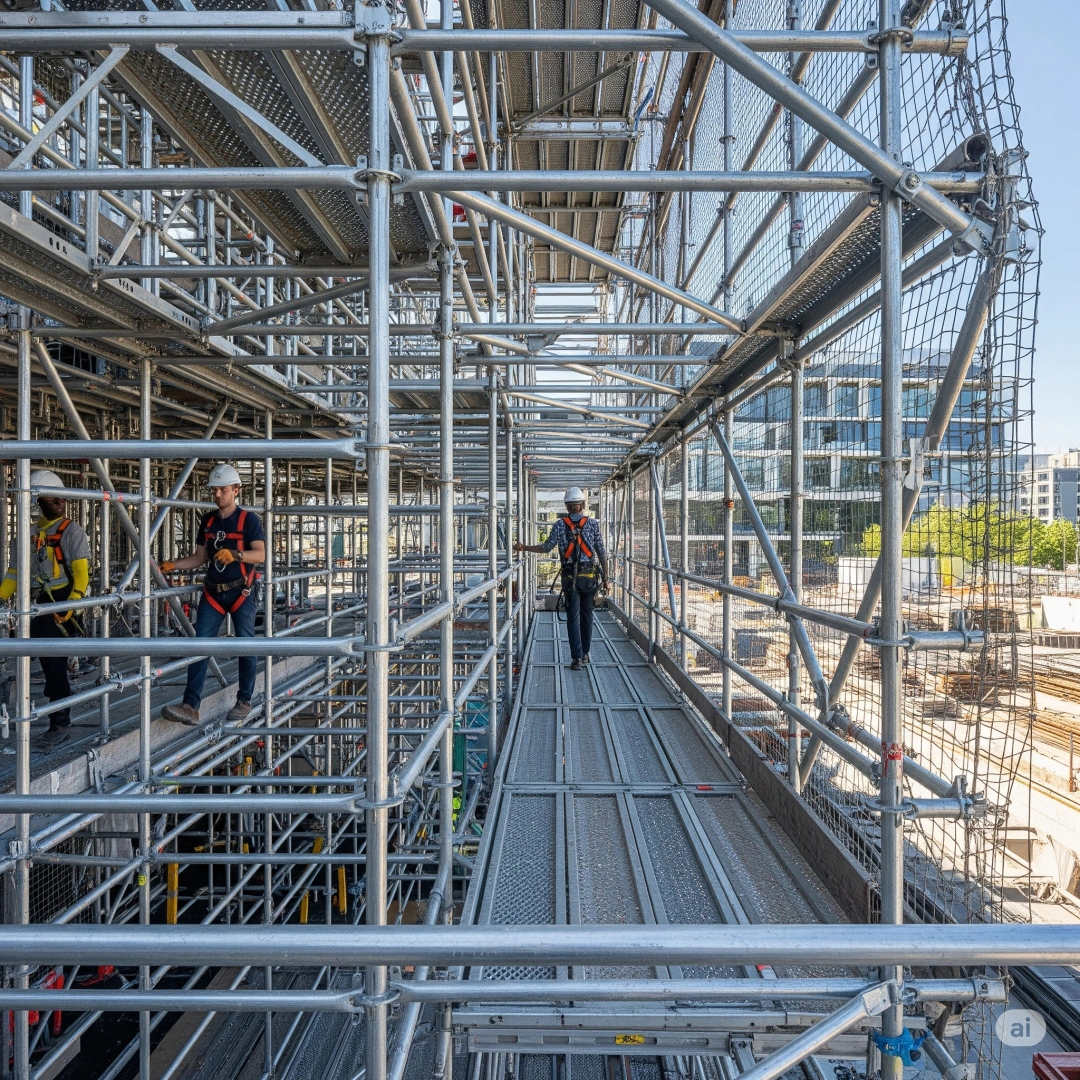
Today, scaffolding systems have become much safer, more durable, and practical, thanks to technological advancements. Especially modern scaffolding systems made of steel have become an indispensable tool in the construction industry, with their high load-bearing capacities and safety features. Companies like ALCAN Scaffolding are shaping the industry by developing these modern systems.